This page follows one child through Koyra: a placement that finds where they really are, a diagnosis of why each answer went the way it did, and lessons built on both.
Looking for dashboards, reports, and how a pilot runs? That is the adults' side, on For schools & NGOs.
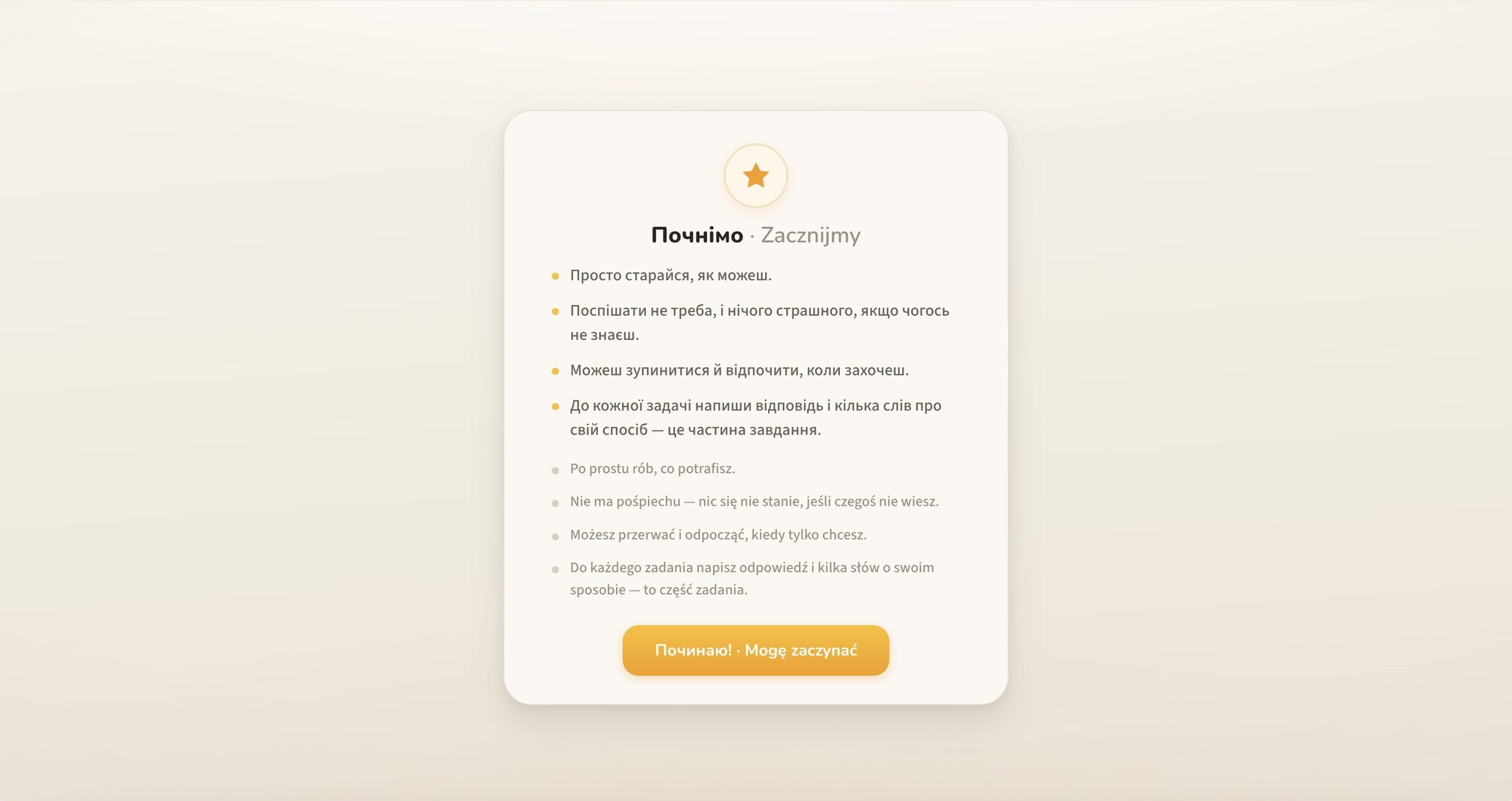
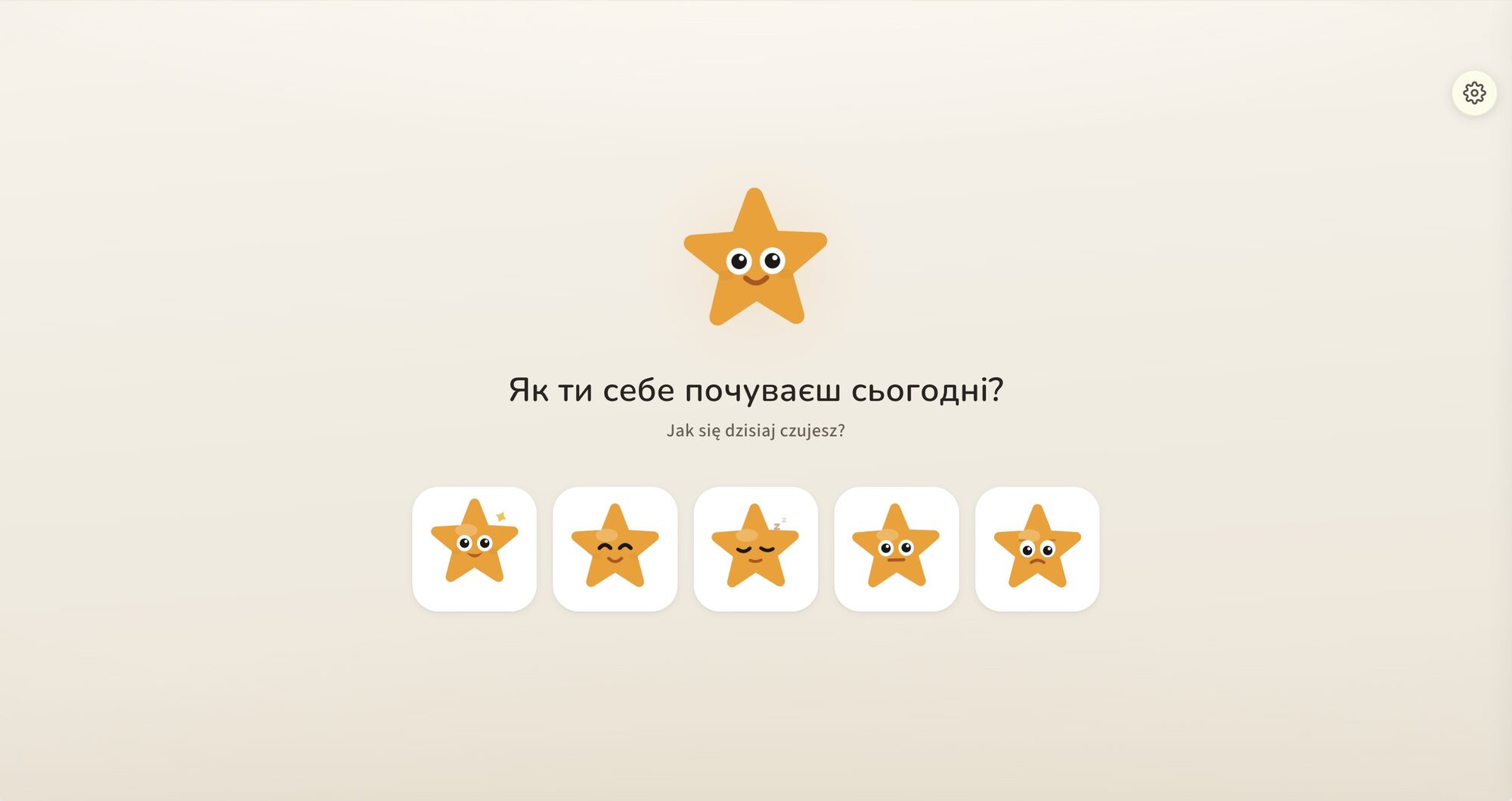
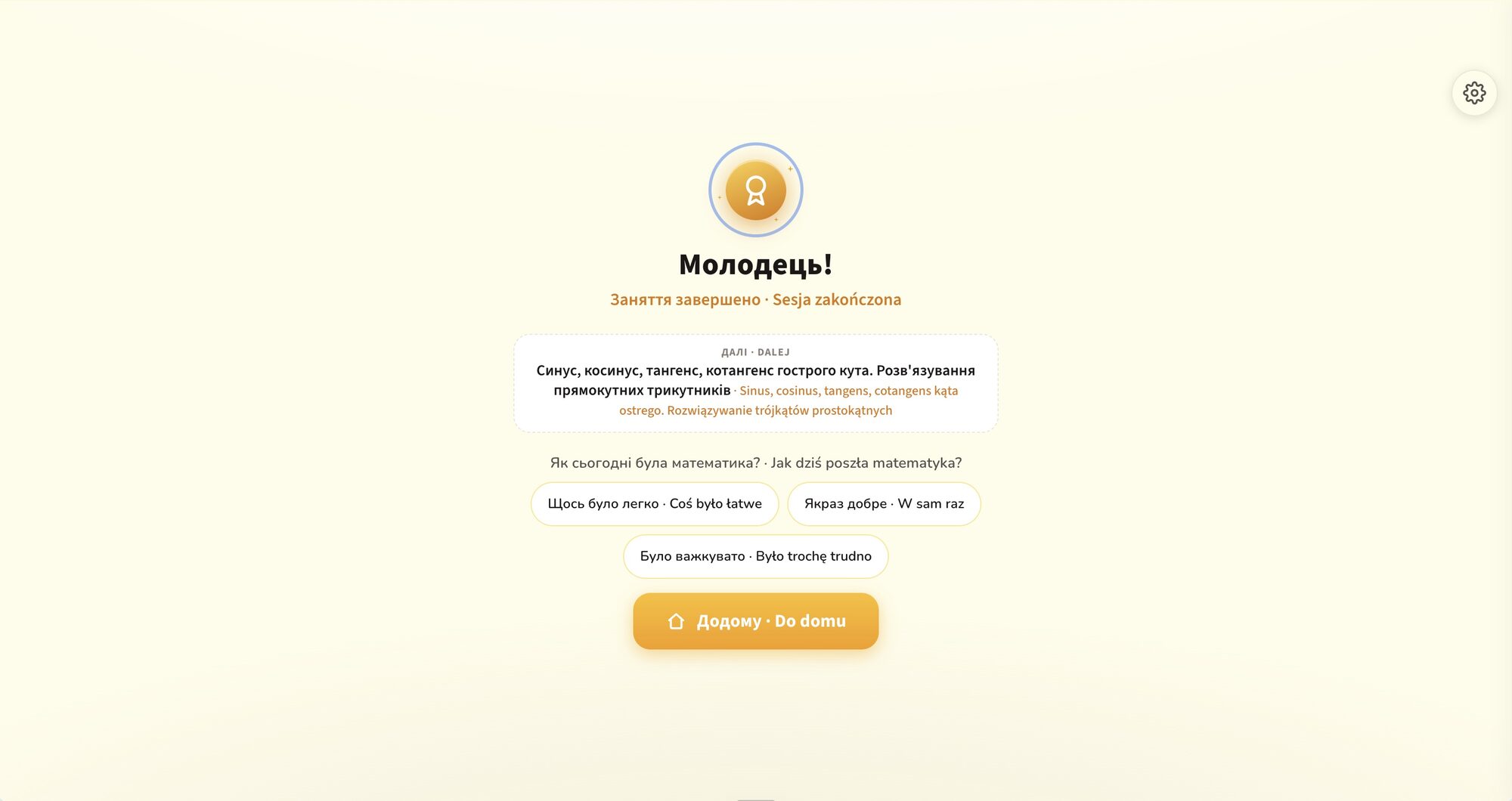
Where every child starts: a calm welcome in both languages. No hurry, and a pause whenever they want one.
1 · Placement
First, a map of what the child knows.
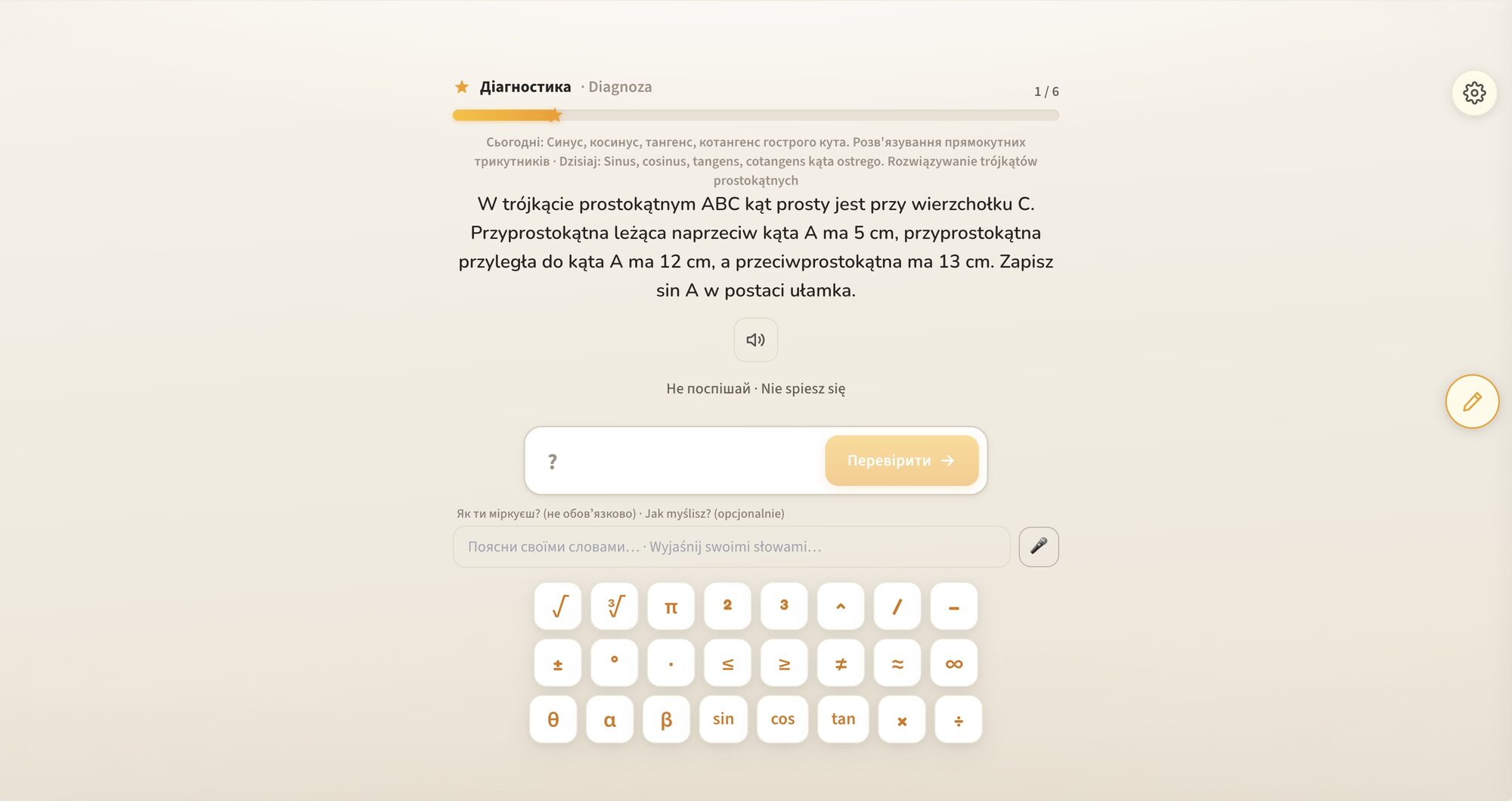
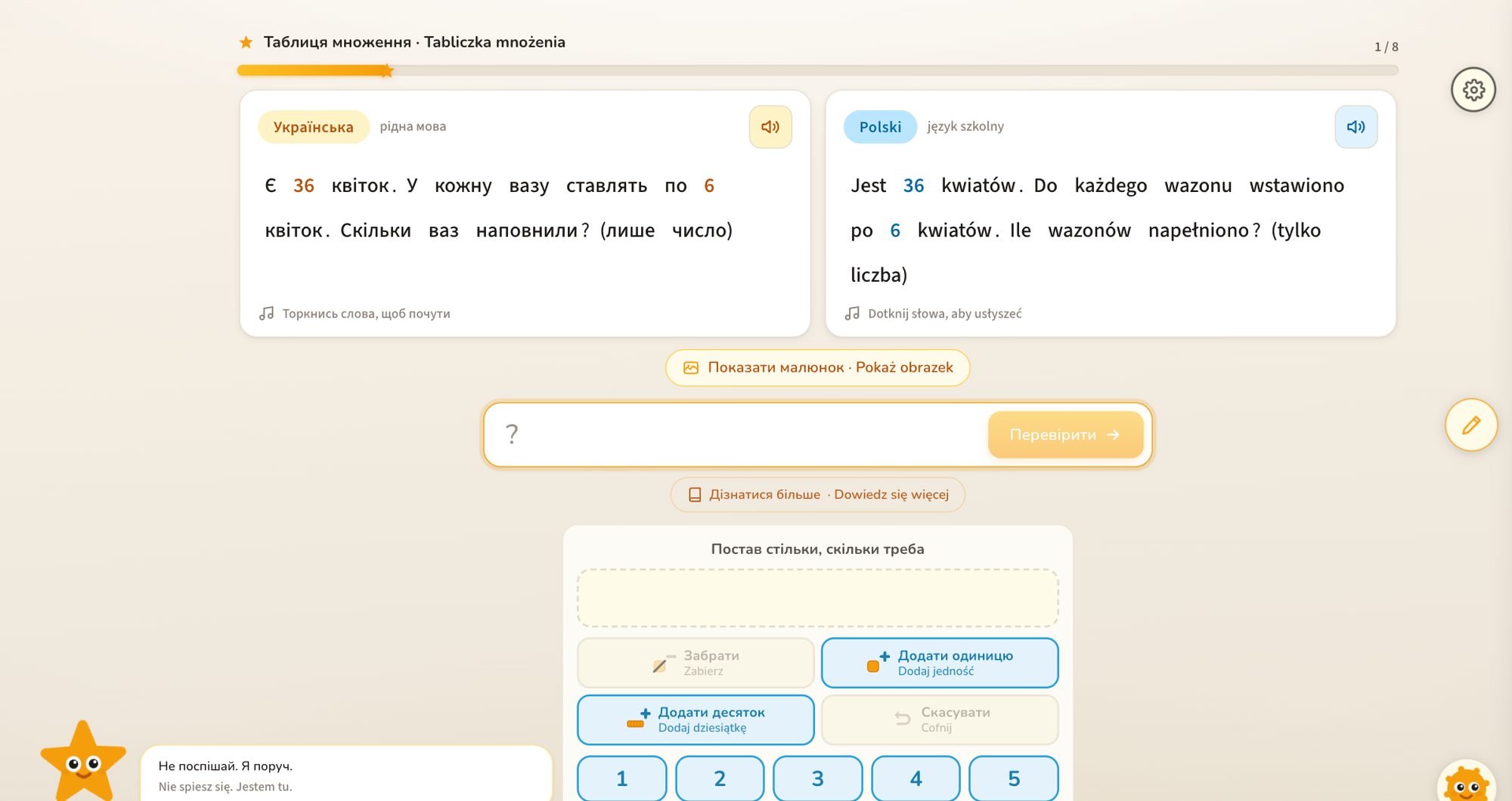
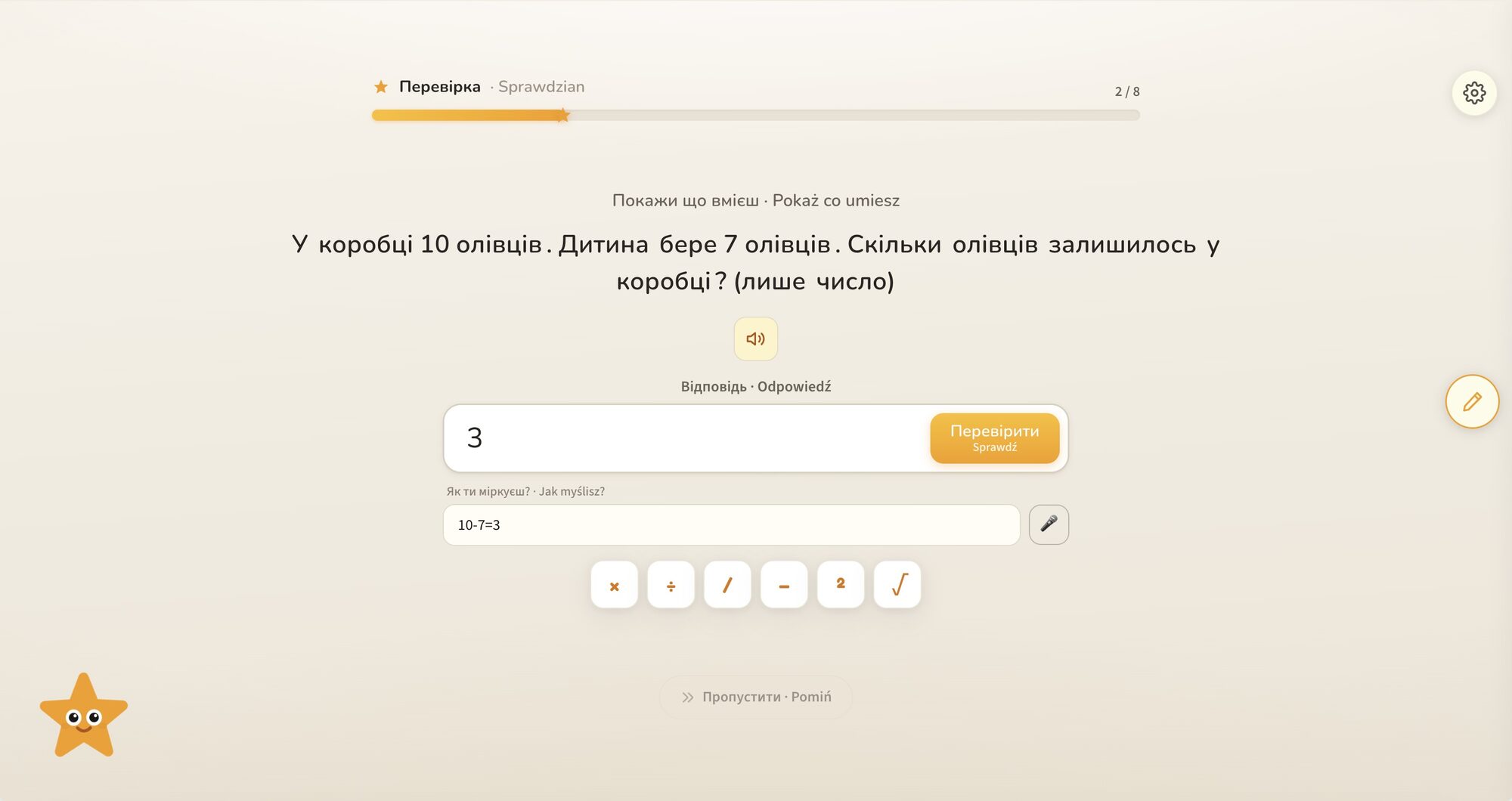
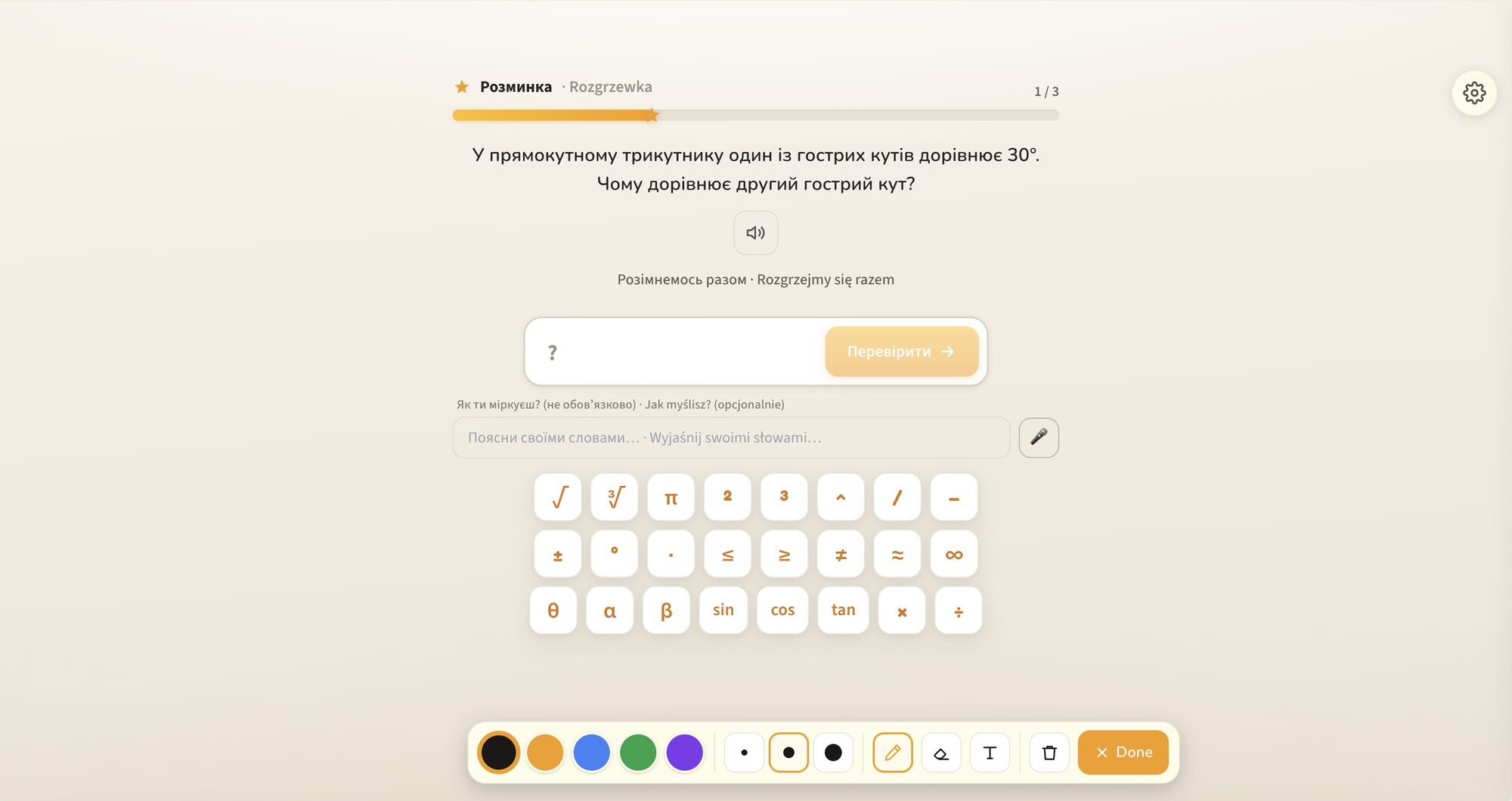
16 to 40 adaptive problems in the child's own language find the real starting grade. The word test never appears. On each problem the child writes a few words on how they solved it, which is what separates a correct method with a slip from a genuine gap.
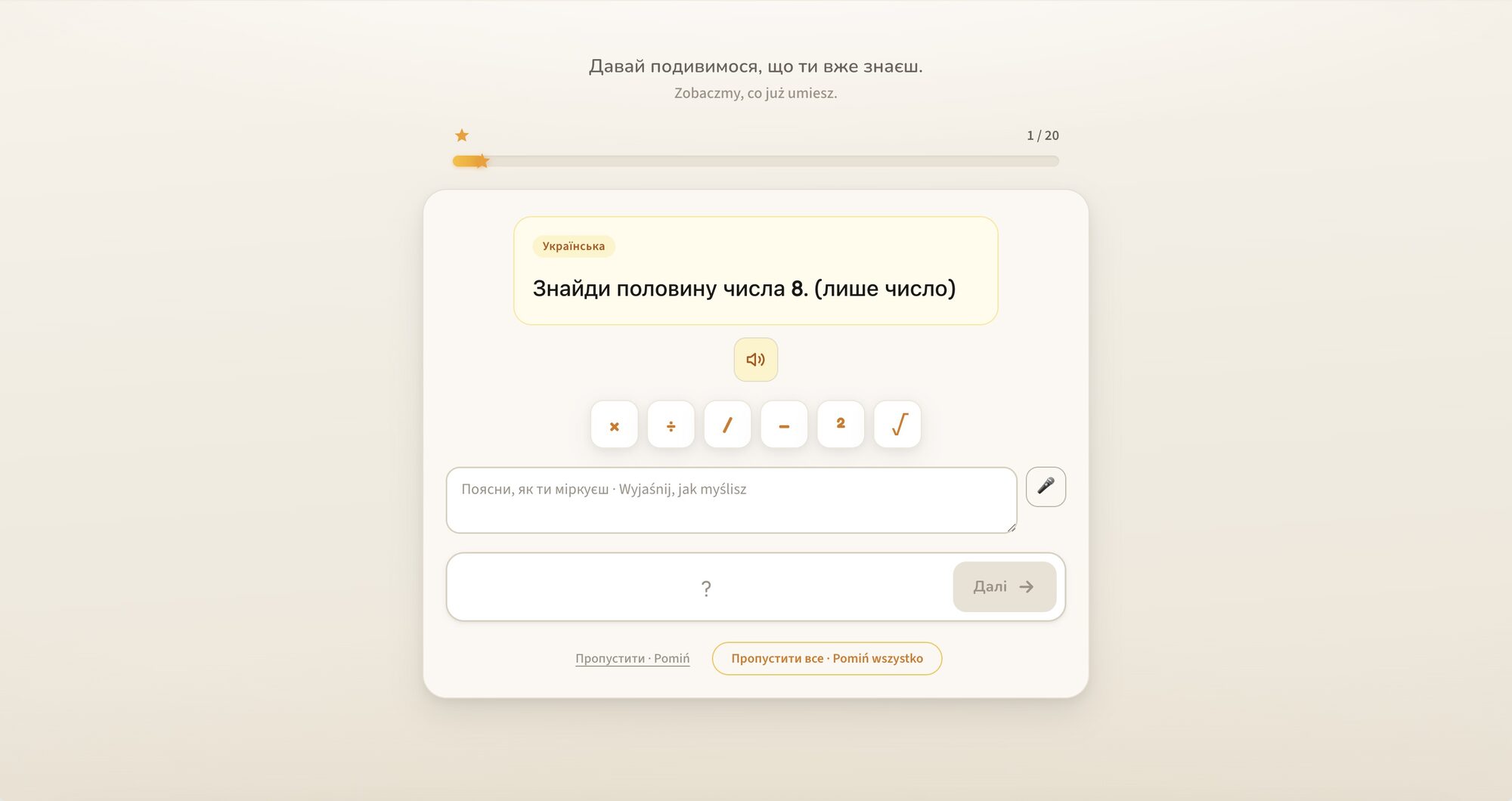
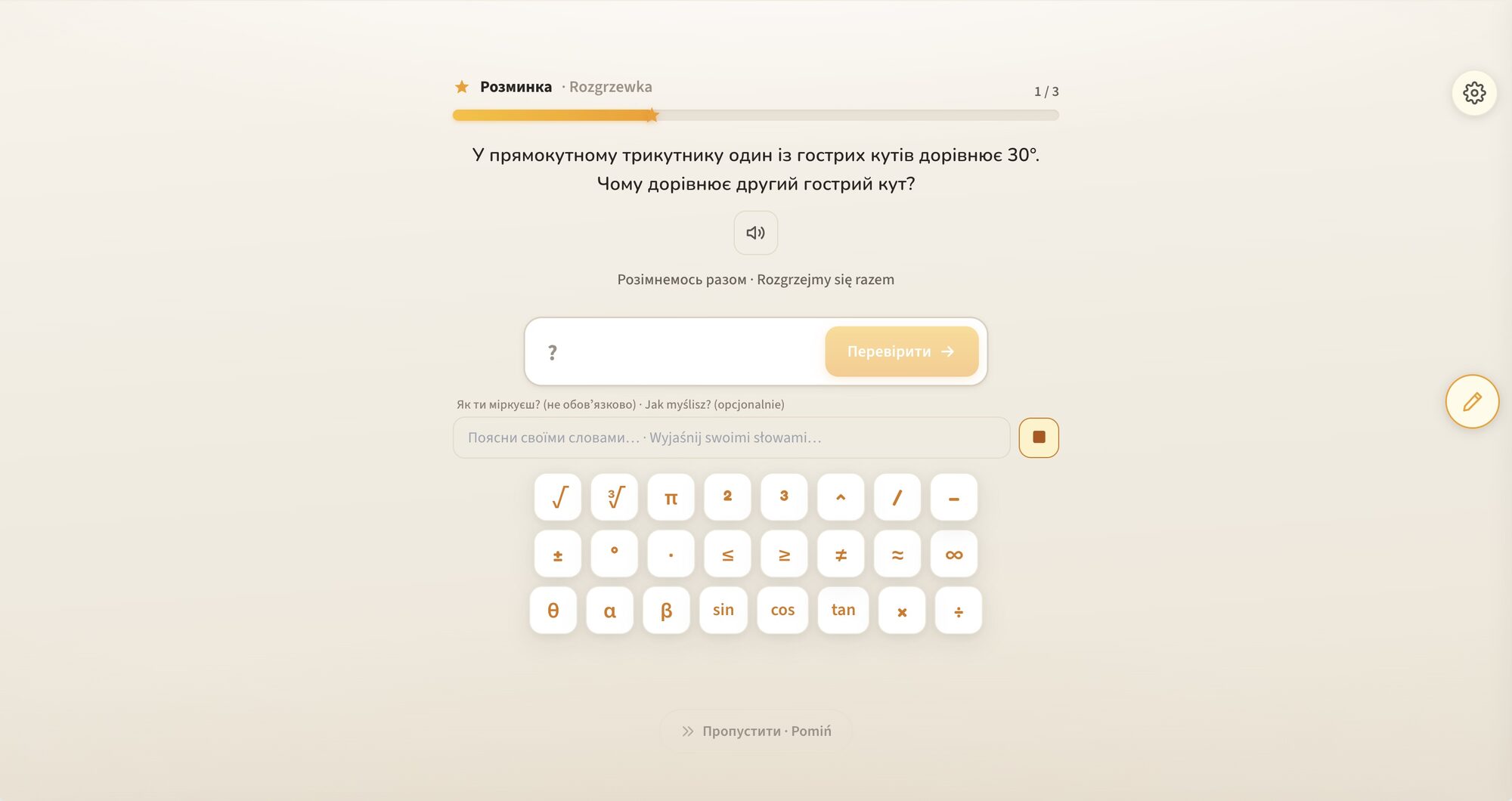
A problem, as the child sees it"Let's see what you already know" is the whole framing. One problem at a time, a box for their reasoning. Breaks are offered about every nine problems.
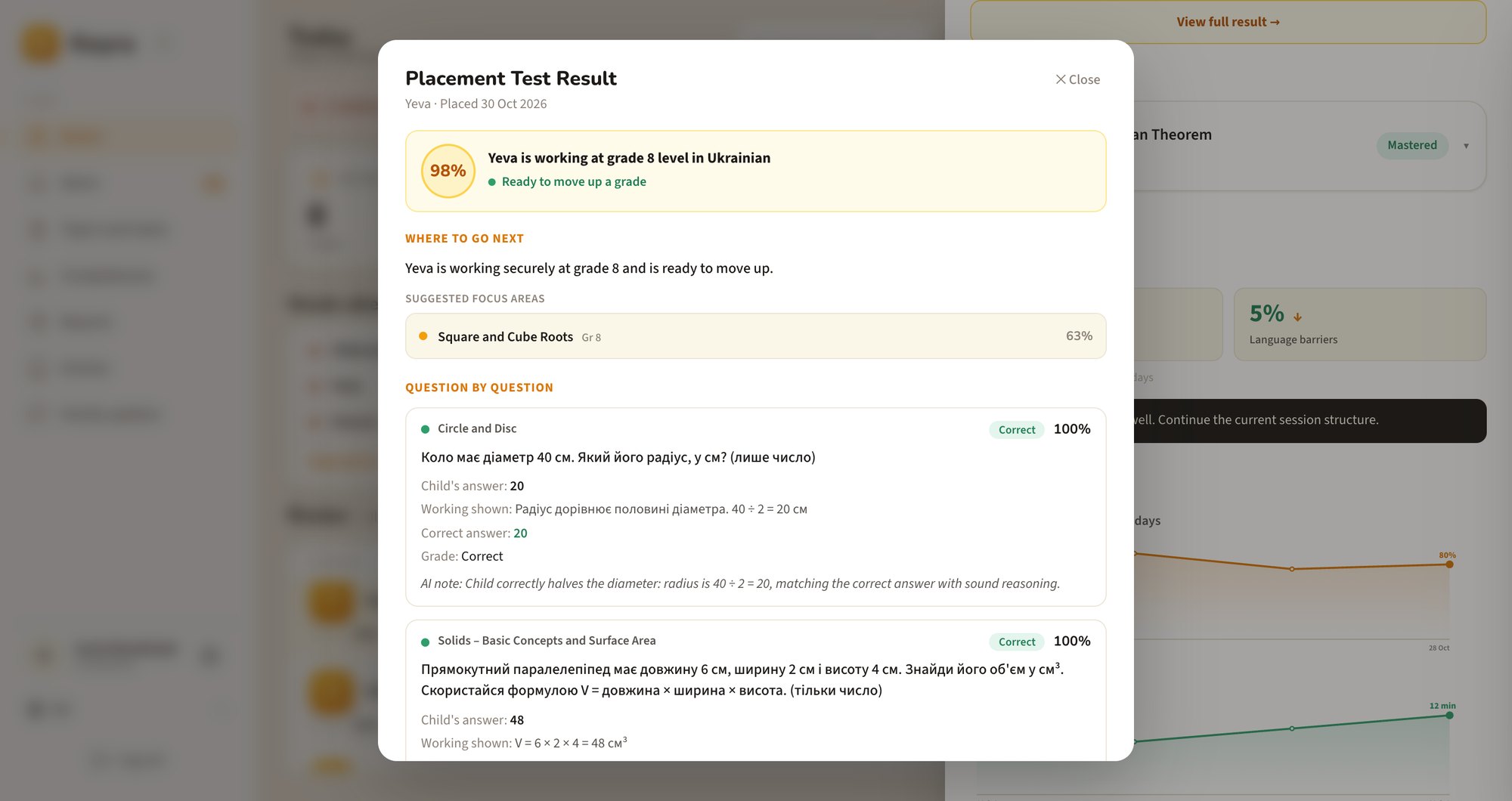
The adult sidePlaced grade, every question with the child's reasoning, and a note on each: correct method, small slip, real gap. The child saw only a warm well-done screen.
Koyra holds the official curricula of Ukraine, Poland, and Estonia. That is how it tells a topic the child has forgotten from a topic the old school had not reached yet, and why the same placement works for a child moving between countries, between languages, or simply between schools within one country.
2 · Every wrong answer, classified by cause
One wrong answer. Five possible reasons. Five different next steps.
A sample scenario: Andriy, in grade 4, compares two fractions in Polish and gets it wrong. Pick a cause and follow how the same wrong answer is resolved.
In the lesson · school language (Polish)
Która liczba jest większa: 2⁄3 czy 3⁄5?
3⁄5
What Koyra checks next
Яке число більше: дві третини чи три п’яті?
2⁄3Same skill, own language, numbers written as words. Correct in seconds.
Verdict
Language barrier. The math was never the problem.
The next lesson keeps the math at his grade, explains it in Ukrainian first, and writes the Polish in short, everyday sentences. Any word he taps, like większa, comes back at the end of the session. No math struggle is recorded, because none happened.
Sample scenario for illustration. Curriculum sequencing in the "never taught yet" case is an example, not a statement about a specific syllabus.
A bridge in every lesson
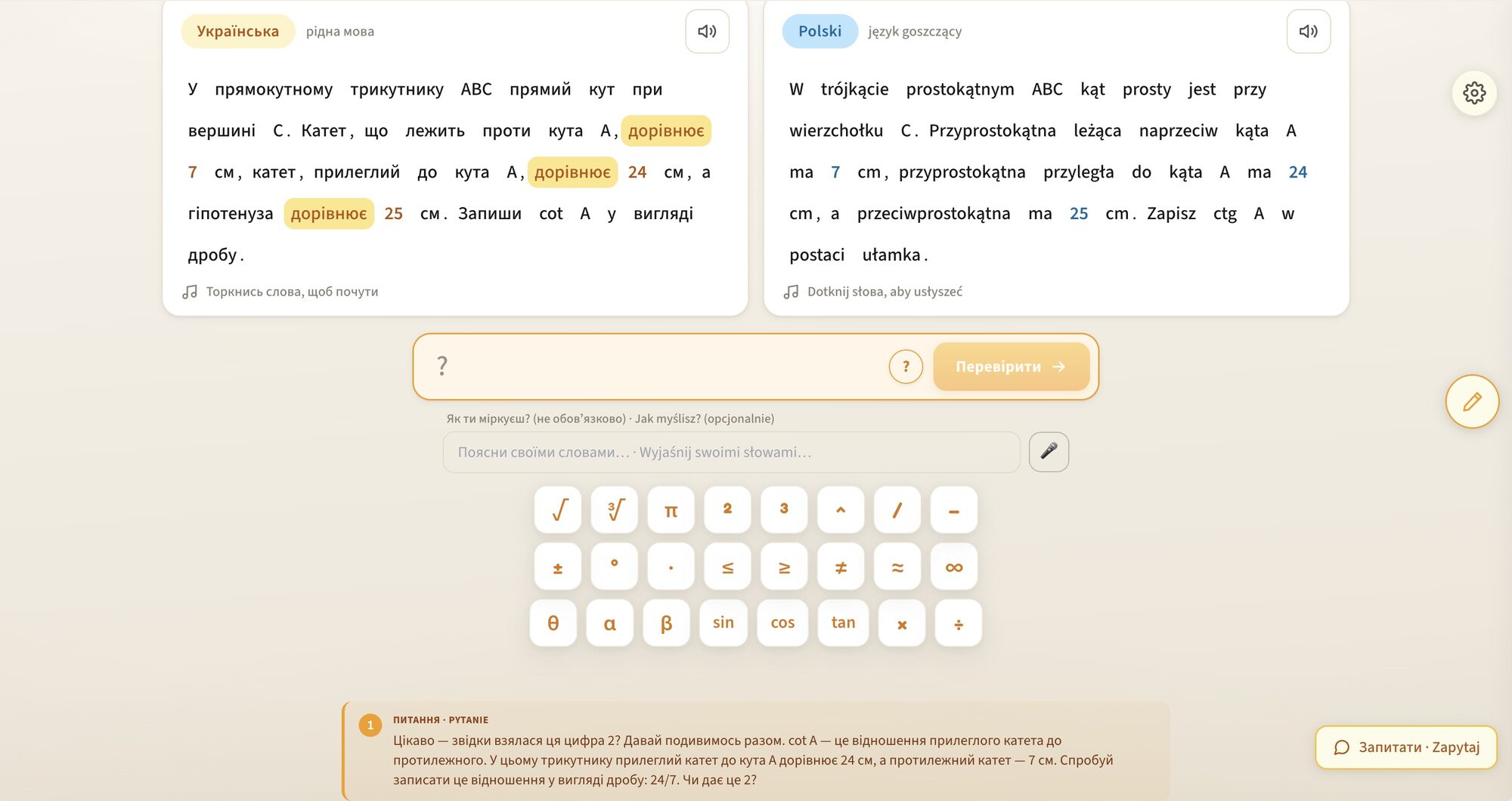
Tap any word for its meaning in the other language. Every tap is logged, so Koyra learns exactly which words block which children and goes over them at the end of each session. Bookmarked words collect in the child's word bank and appear in the teacher's report as blockers.
Українськадві третини
⇄
Polskidwie trzecie
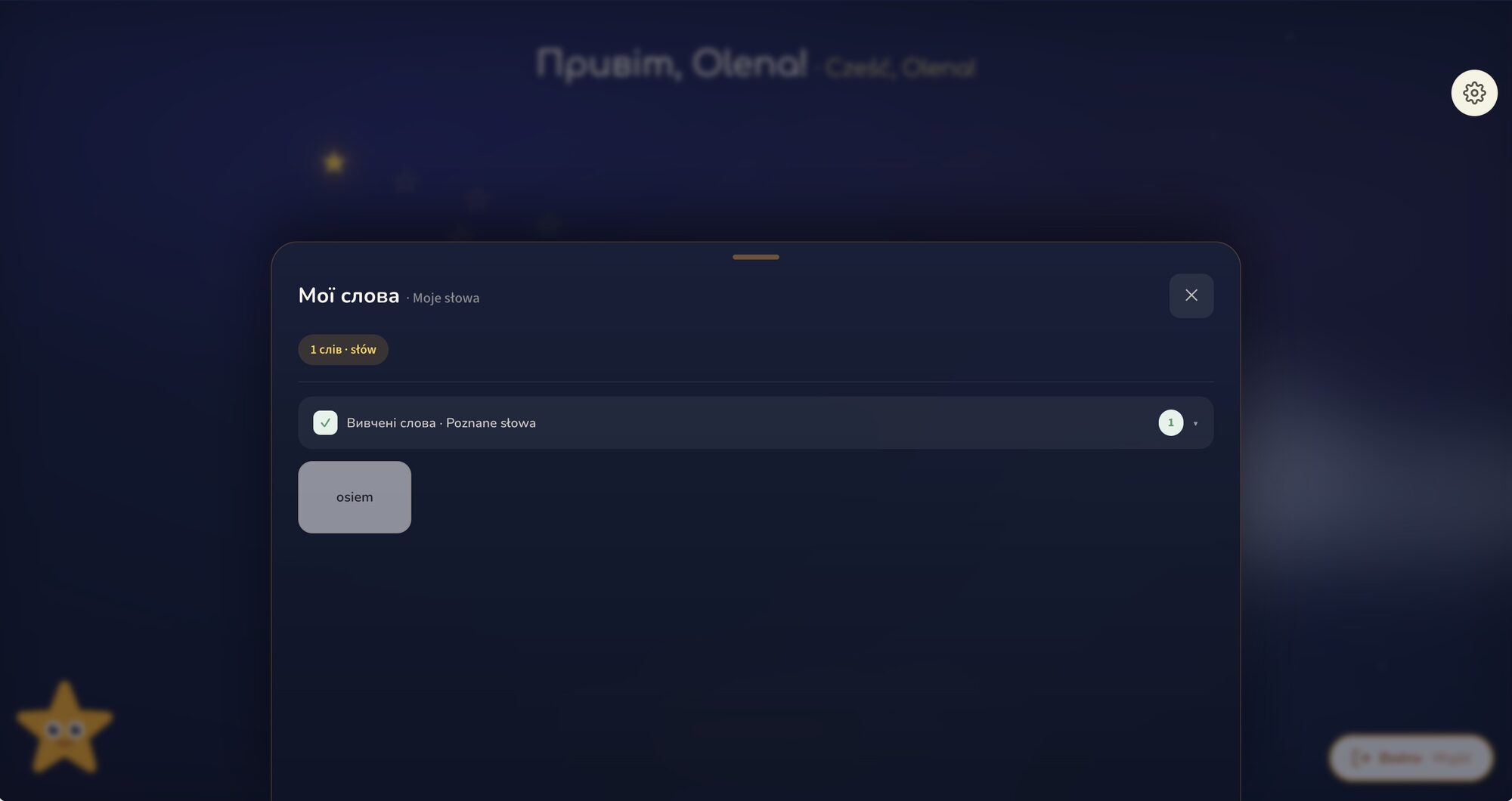
The word bank. School language on the front, native on the back.
3 · A session, start to finish
Predictable on purpose. Only the content changes.
01
Mood
One tap, no words. Always first. A hard day means a shorter, gentler session.
02
Warm-up
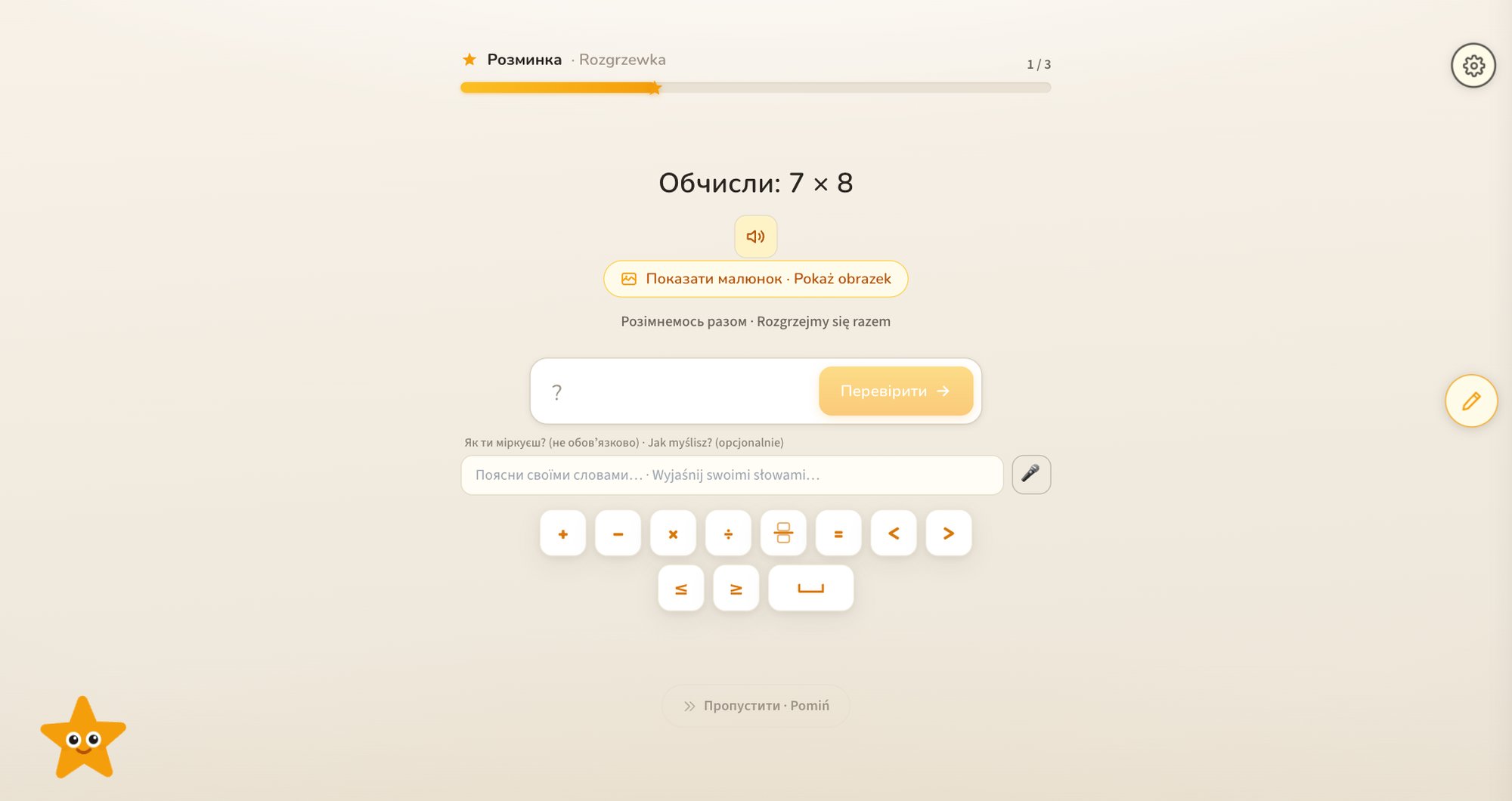
Two or three easy problems in the native language. Success comes first.
03
Diagnostic
Before any teaching, a few problems, one language at a time. Koyra measures what the child already knows, and the lesson adapts to that.
04
Lesson
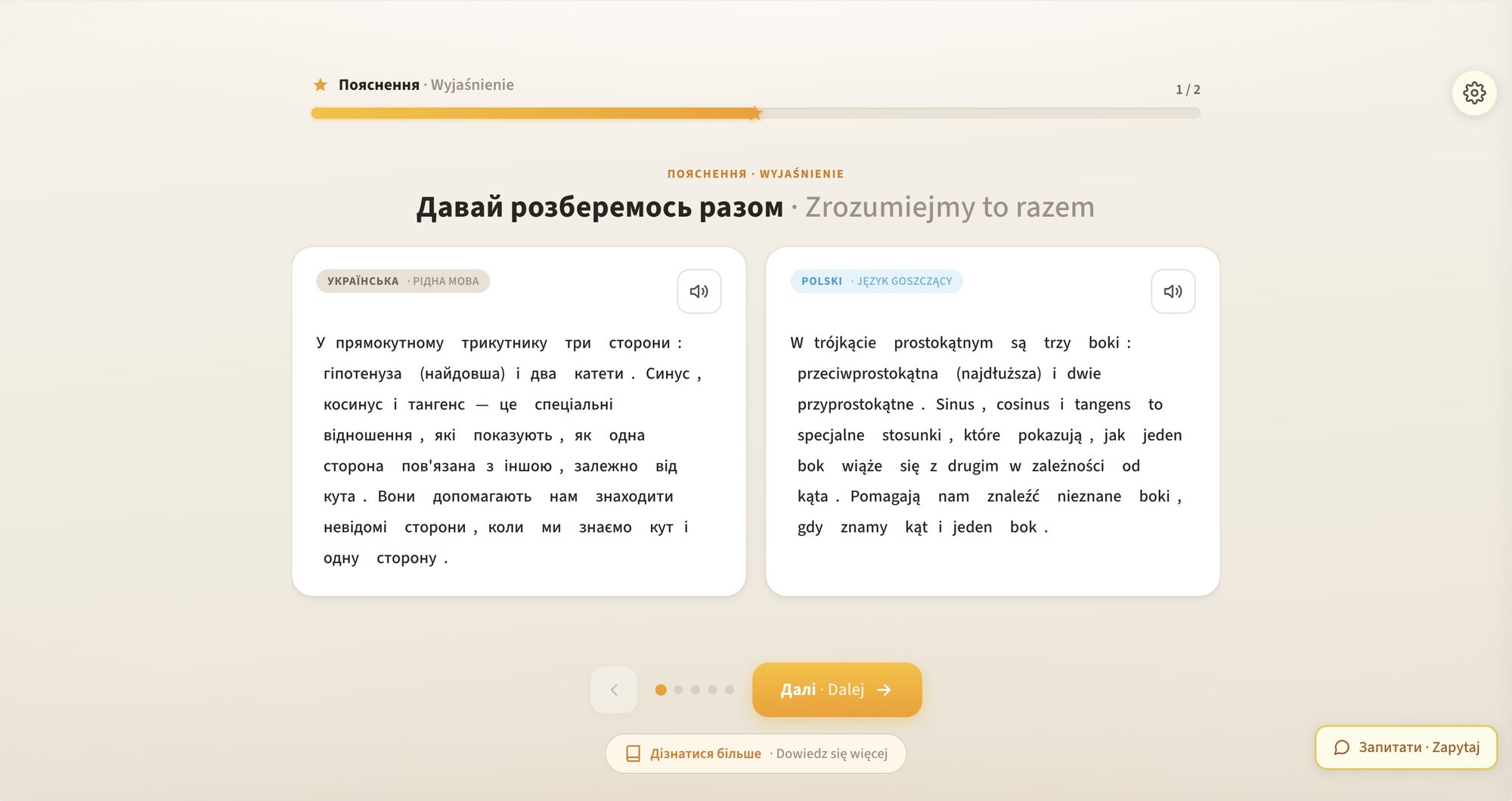
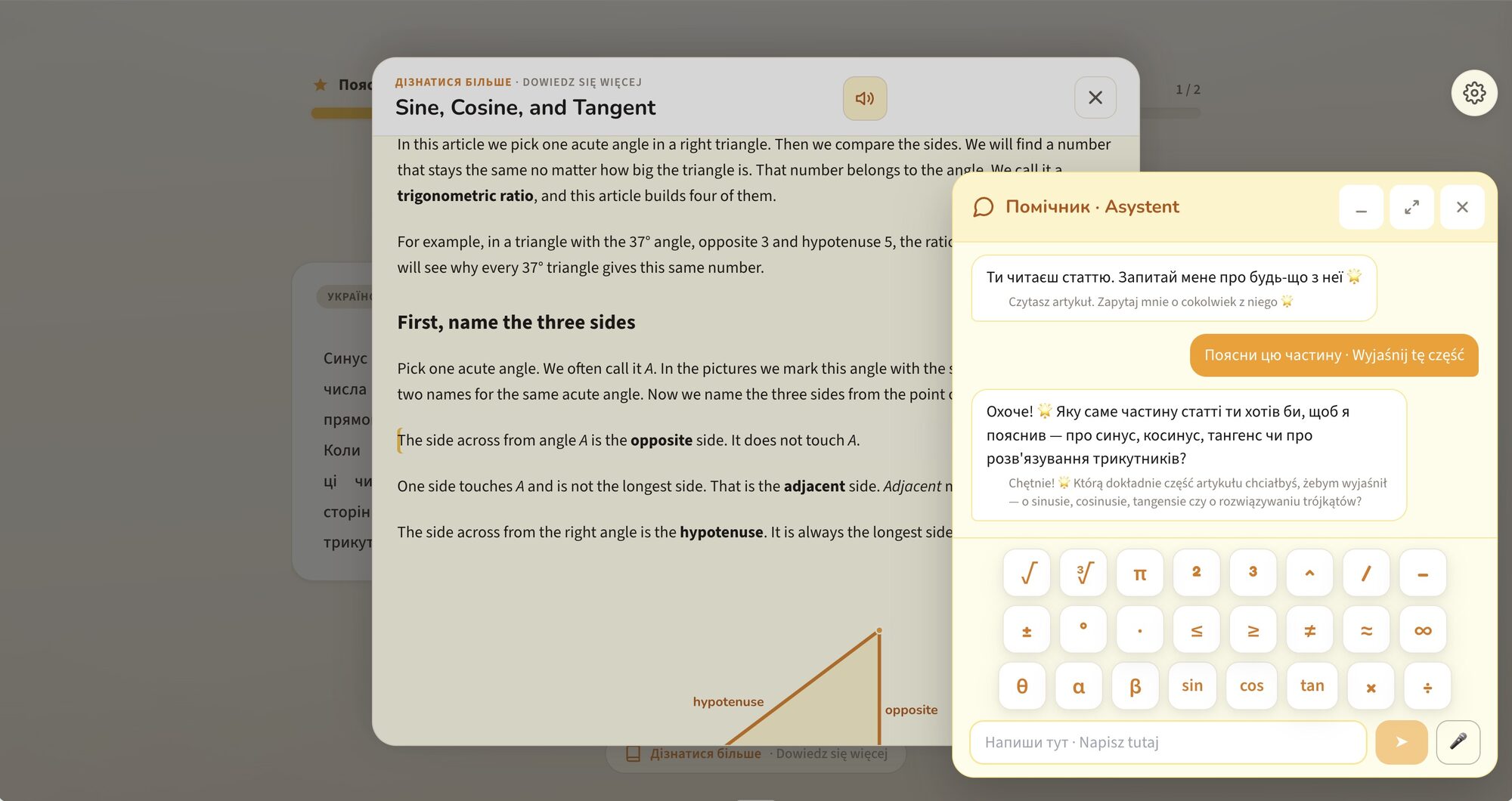
Bilingual slides, articles to go deeper, and Zirka to ask.
05
Worked examples, then practice
Practice problems on the same topic, both languages side by side.
06
Mini-check
Reasoning required, no grade shown. A teacher's own worksheet can take its place.
07
Vocabulary check
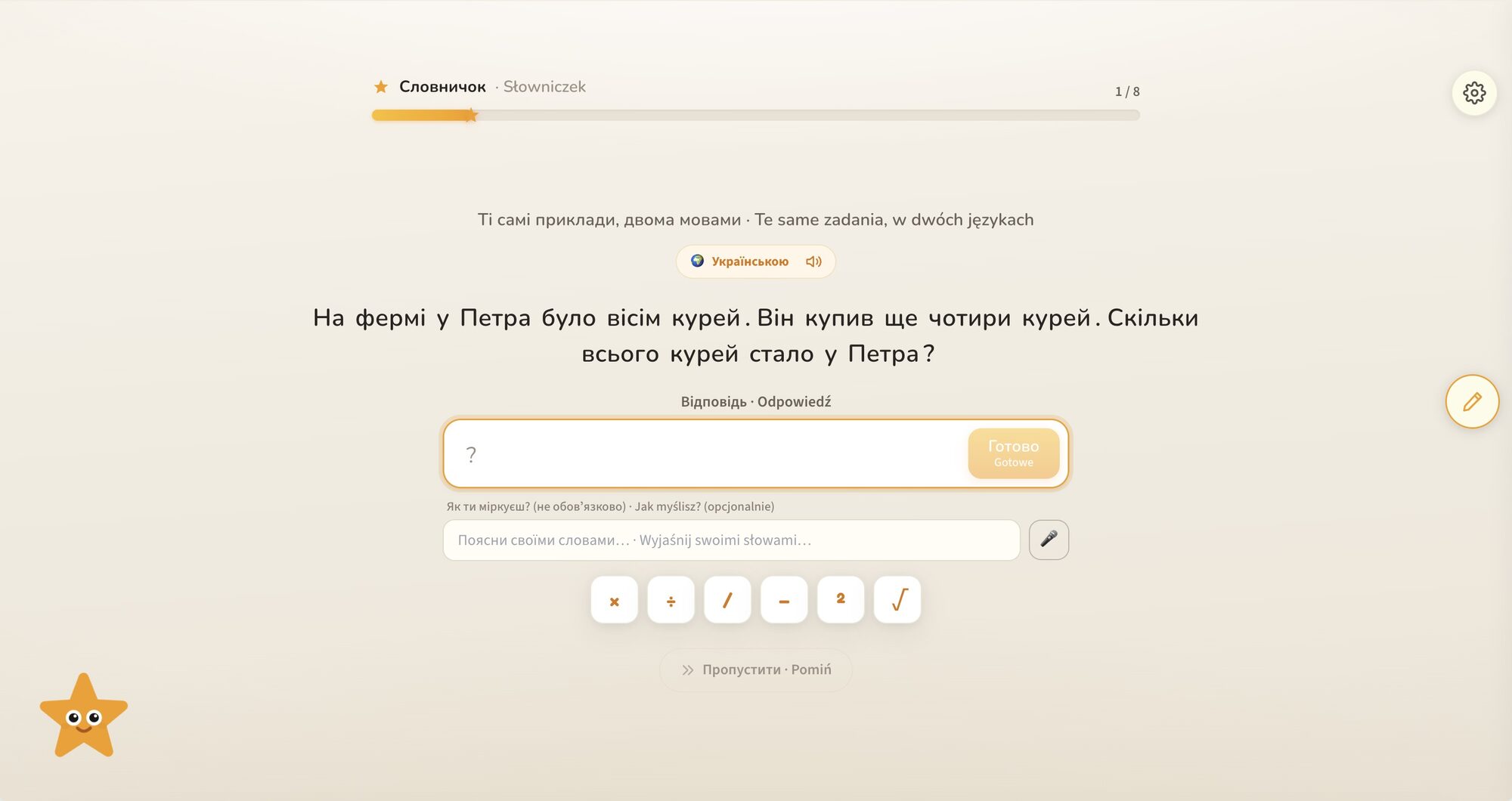
The same skill once in each language, with numbers written as words, so language has nowhere to hide.
08
Stars and one last question
One to three stars, never zero. What comes next, in both languages. How did the math feel today?
10 to 45 minutes depending on age and settings. A topic counts as mastered at about 80 percent across two sessions, in both languages. An interrupted session resumes at the same problem.
Three things mean a child can never be stuck.
In the lesson
Zirka, the tutor
Answers questions about exactly what is on screen. Guides, never gives the answer. A friendly star for the youngest, a plain chat for teenagers. Switched off during checks.
Right after the lesson
Worked examples
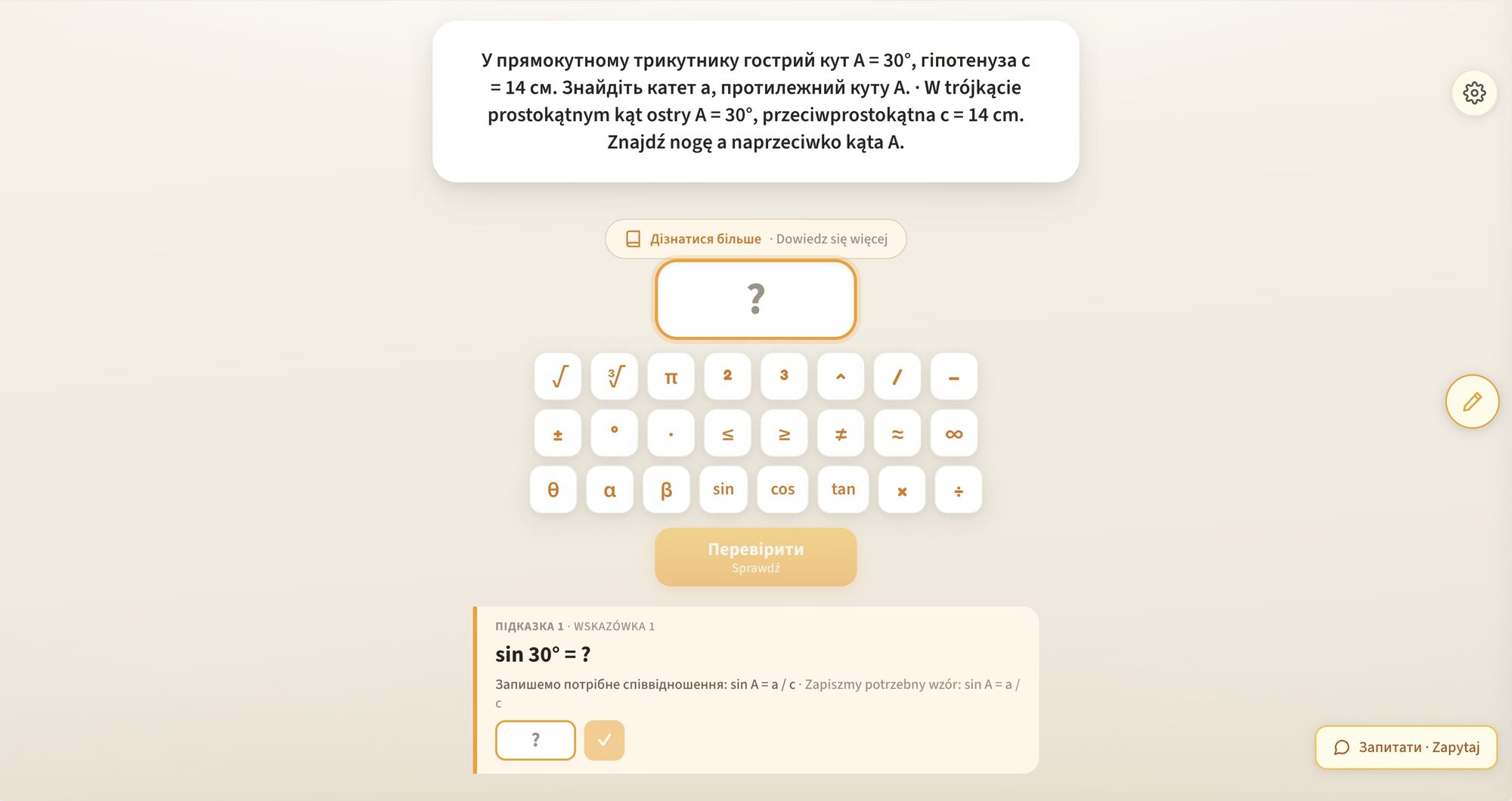
Try it yourself first. A miss opens hint one, then hint two. Some hints have their own answer boxes, so the child works inside the hint.
In practice
The hint ladder
Almost, try again. A guiding question. The bare equation. The first step, written out. The full solution, always the last rung and never the first. Getting there still earns stars, and the problem then moves on by itself.
Also in a session
Small things that keep a child working.
Voice, both directionsTwo read-aloud voices, one per language, so the ear learns which is which. A microphone by the reasoning box: speak instead of typing. Koyra keeps the words, not the audio.
Draw anywhereA scratchpad over any problem. Nobody sees the drawing; it clears at the next problem.
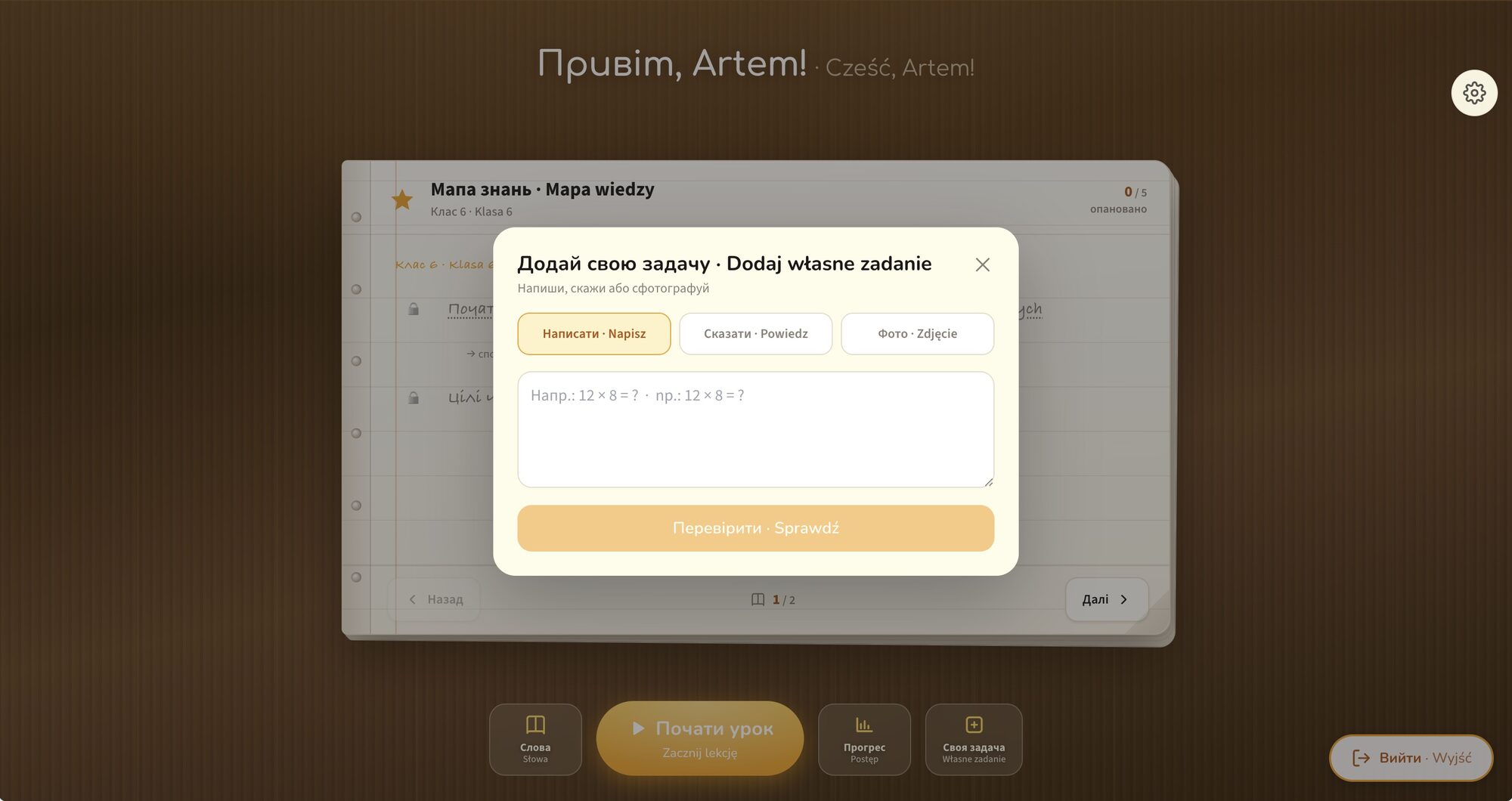
Children bring their own problemsType it, say it, or photograph it, even homework from school. If it fits their level, it joins their practice. In grades 1 to 4 it first waits for an adult to approve it; in grades 5 to 9 it is used at once and shown to an adult to check.
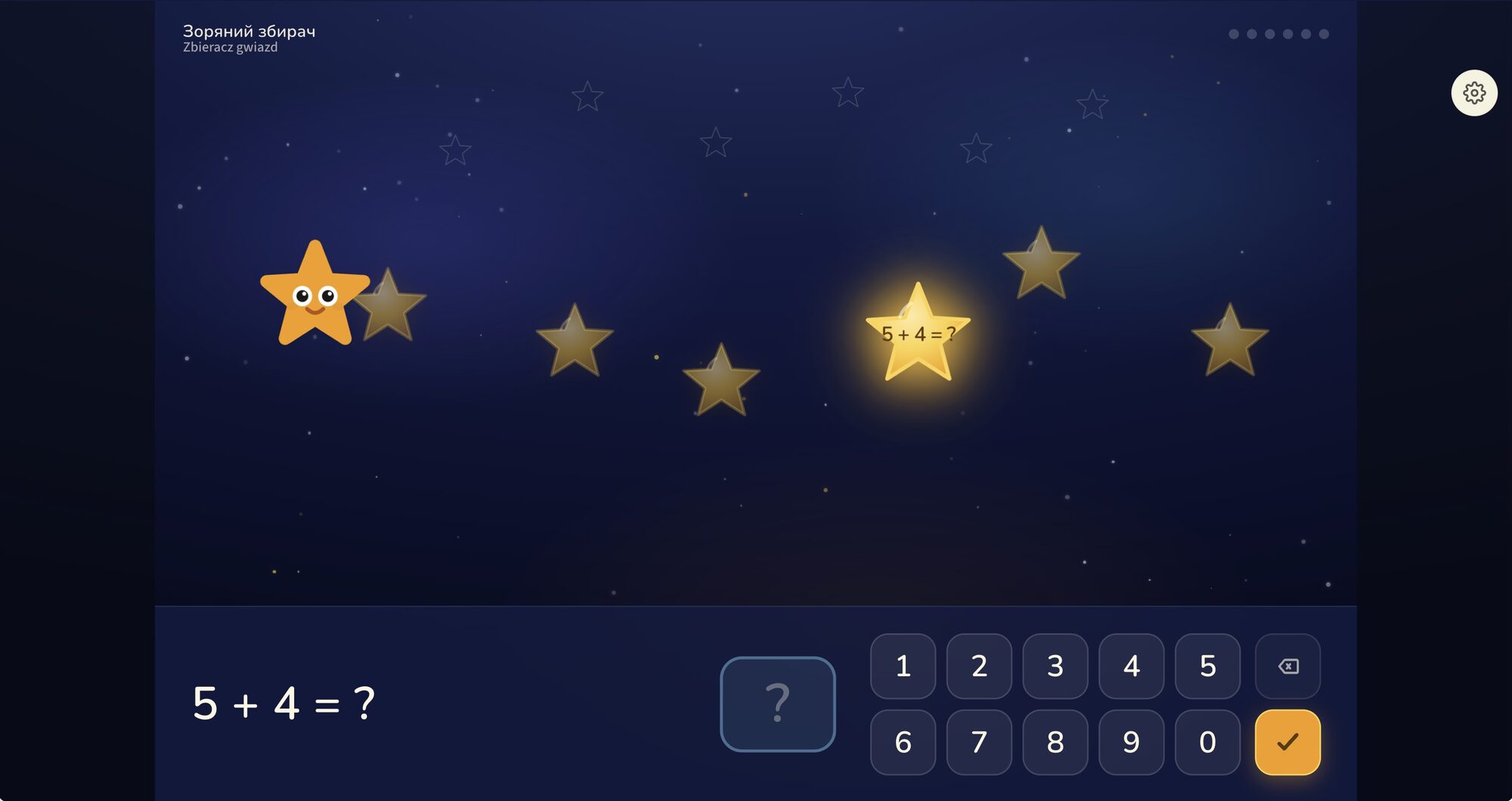
Games, grades 1 to 4One short game before practice, chosen automatically. Six problems, one hint, then quietly on. A child can leave any game with one tap.
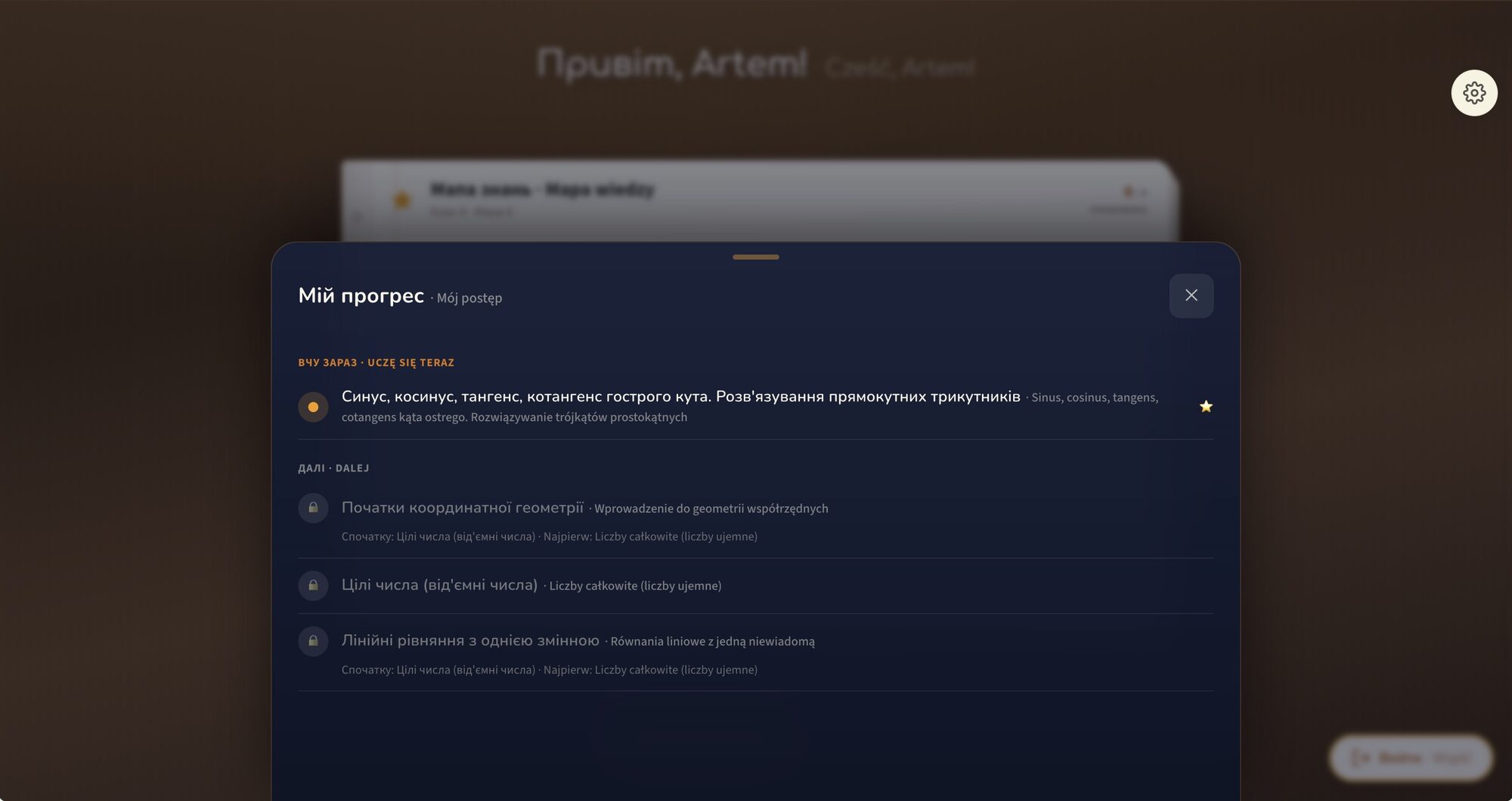
The progress drawerStars this week, topics conquered, what is next. Never a percentage, never a comparison.
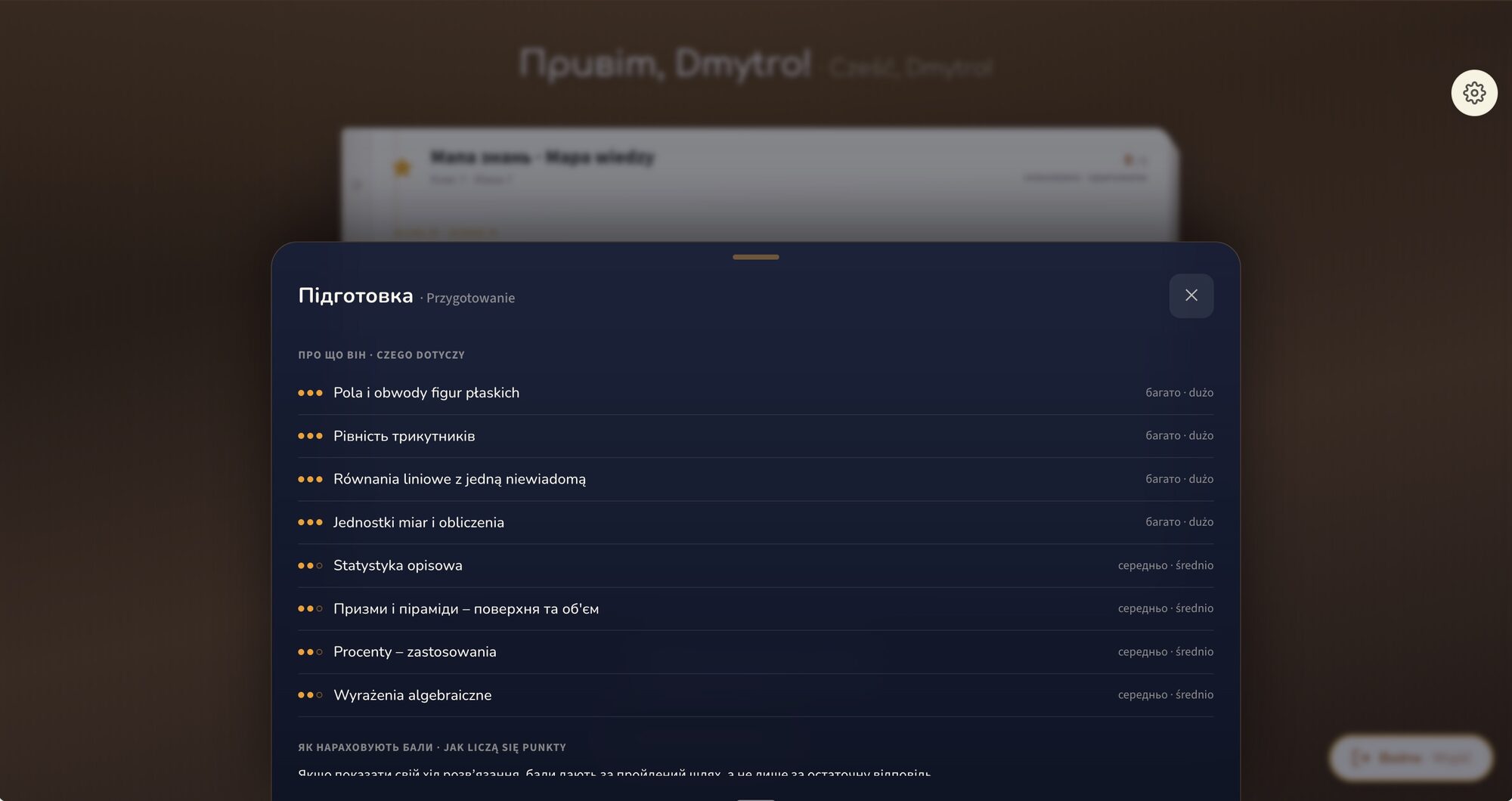
Exam preparation, calmlyWhen a teacher attaches a real exam, the child sees only its topics by weight, in both languages, and how marks work. Never a date, a duration, or a percentage.
4 · It gets to know each child
Two children in the same classroom get different sessions.
One language or two: a child in Kyiv learns in Ukrainian, a child in Tallinn in two languages at once. The teacher stays in control: level, topic, session length, and their own worksheets.
Level
From the placement, then from mastery over time. A living map of what is mastered, in progress, and error-prone.
Pace and length
From engagement, which is measured. A child who quietly disengages is flagged rather than lost, and the session winds down gently.
Language support
From how the child does in each language. A child held back by the school language gets simpler wording in it, the explanation in their own language first, and their own word beside a hard term in the diagnostic and mini-check.
One tutor, two ages.
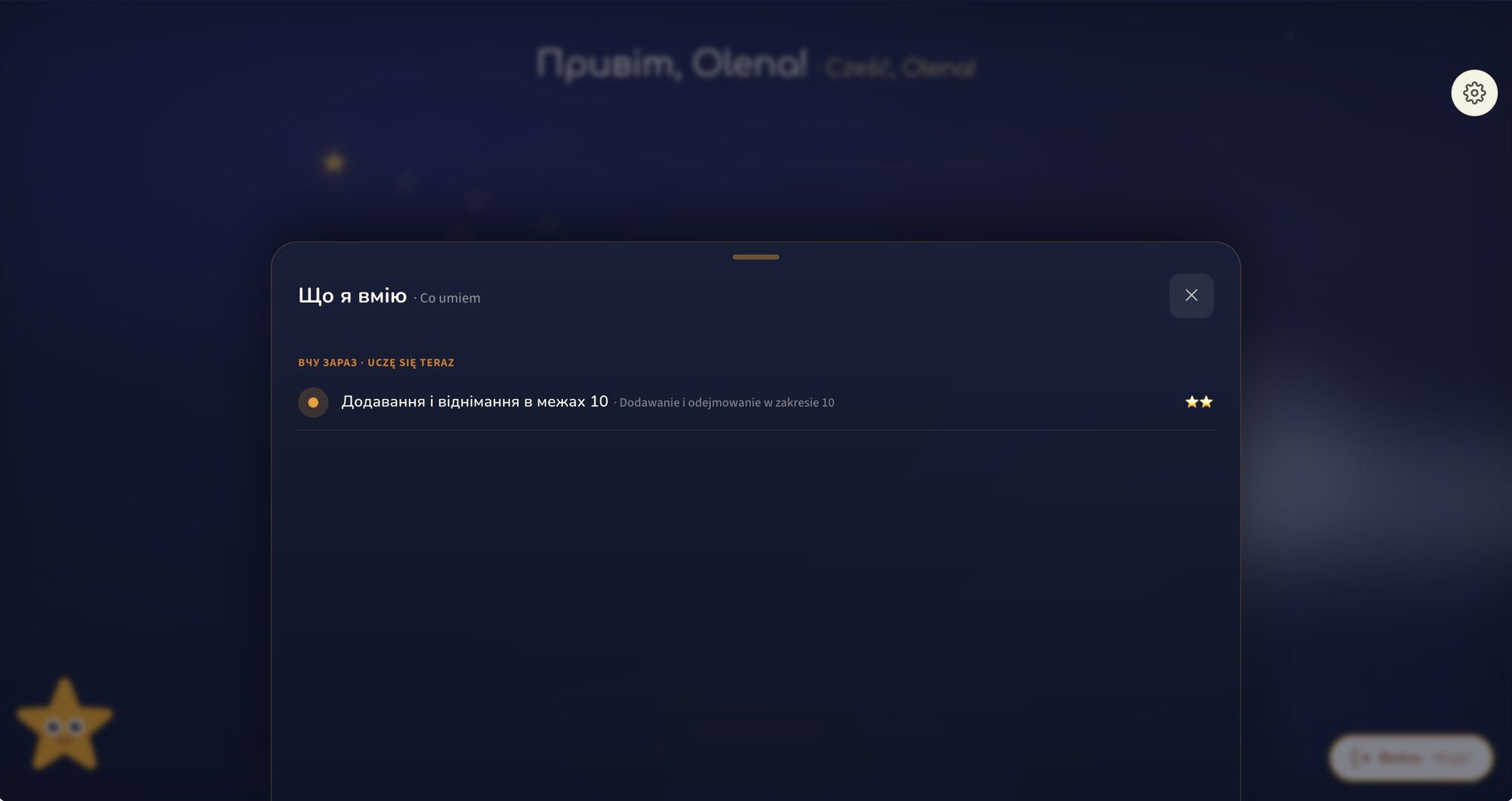
Grades 1 to 4Their own night sky. Every mastered skill becomes a star. Zirka lives here.
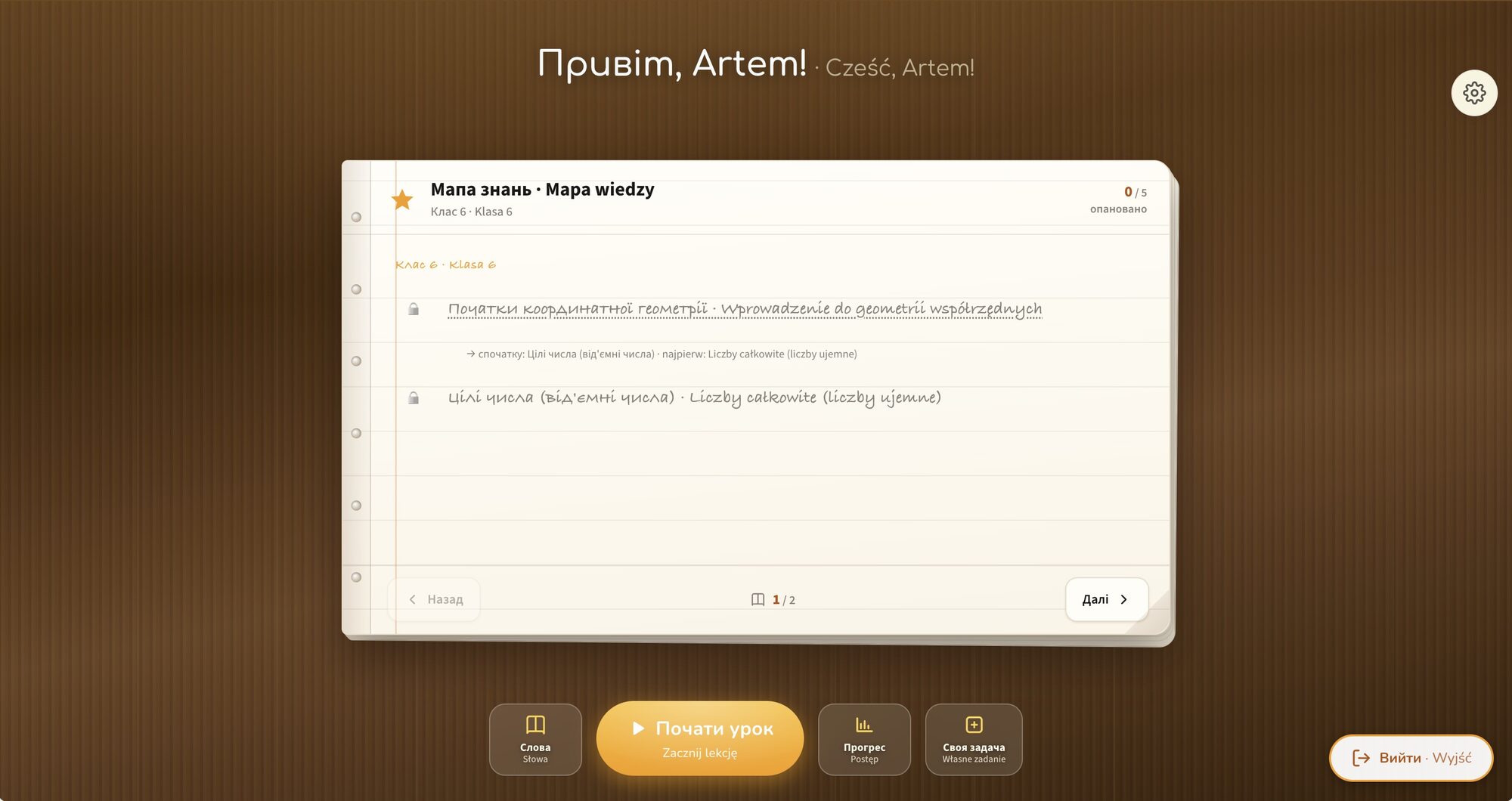
Grades 5 to 9A knowledge map, one page per grade, like a notebook. Locked topics say exactly which topic opens them.
5 · The diagnosis reaches the adults
Koyra does the noticing and returns a sentence to each adult, in their own language.
A card for the teacher every morning, a formal report for the school, a weekly note for the family.